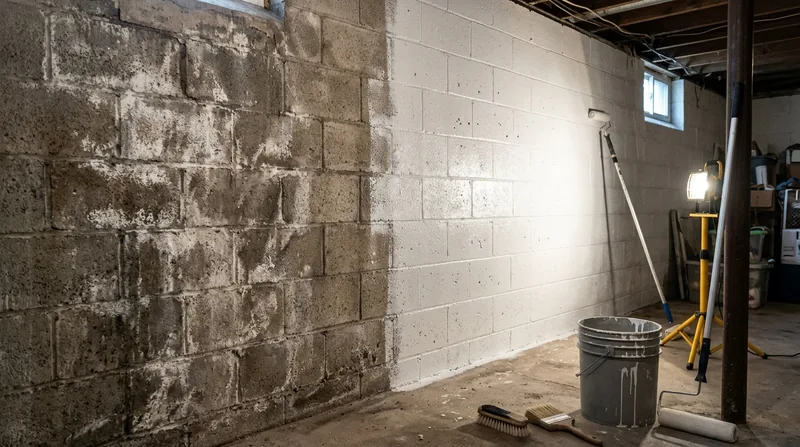




Lansing sits on glacial till and clay loam, and the Grand River and Red Cedar River floodplains keep the water table high well into spring. In REO Town, Old Town and the Westside, 1900s brick and frame bungalows and foursquares still have fieldstone or early poured concrete basement walls that wick moisture all winter. Eastside and Moores Park Capes and ranches from the 1920s to 1950s often have partly finished basements where damp walls show up as efflorescence and a musty smell. For homeowners dealing with damp walls, Basement Wall Sealing in Lansing starts with an honest diagnosis: a sealer fixes minor dampness, not hydrostatic pressure. We prep the surface, remove efflorescence and apply a penetrating or membrane sealer only when the wall actually calls for it. If the water is coming from the footing drain or pushing through a crack, we say so and point you to basement waterproofing instead.
Why Damp Basement Walls Are a Lansing Problem, Not a Cosmetic One
Long freeze-thaw winters open hairline cracks in block and poured walls across Lansing, and spring snowmelt pushes water toward footing drains that are often 80 to 100 years old. Glacial clay soil holds that water against the wall instead of letting it drain away. Sealing a damp wall buys time and stops surface dusting, but it will not hold back a rising water table. We tell you which problem you have before we open a bucket.
- Fieldstone and early poured walls in Old Town and REO Town wick moisture through the mortar and porous concrete.
- Block walls in 1950s to 1970s East Lansing and Okemos ranches show efflorescence where water moves through the cores.
- Poured walls in Delta Township, Holt and Dimondale subdivisions crack at the cold joint and around tie holes.
- Downspouts that dump at the foundation corner saturate the clay loam and drive dampness through the wall.
If you see white powder or dark damp patches, the wall is telling you where the water is coming from.
Key info: A 1920s foursquare off West Saginaw had efflorescence on three walls every March. The owner wanted sealer. We found a failed footing drain and standing water in the sump basin, so we recommended an interior perimeter drain first. Sealing that wall alone would have trapped the moisture behind the coating.
For official guidance on basement moisture and structural repair, the City of Lansing's building department is the authority to check before any structural work: City of Lansing.
How We Seal Basement Walls in Lansing Homes
We start with a free basement inspection, because the wall tells us whether it needs a sealer or a drainage fix. On a 1950s Eastside ranch, that might mean checking the block cores and the cold joint. On a 1990s walkout in Holt, it means looking at the exterior grade and the dimple board. The steps below are what a straightforward sealing job looks like when the diagnosis supports it.
- We inspect the wall, the floor joint, the window wells and the sump basin to rule out active water entry.
- We wire-brush and scrape loose mortar, old paint and efflorescence off the wall surface.
- We fill hairline cracks and tie holes with a hydraulic cement or epoxy patch before sealing.
- We apply a penetrating sealer on porous block and poured walls, or a membrane sealer where a film is appropriate.
- We extend downspouts and correct the grade so water sheds away from the foundation.
- We leave you a written note on what we sealed and what still needs watching.
Sealing is the last step, not the first, and we only recommend it when the wall is dry enough to take a coating.
Key info: In a DeWitt split-level, the homeowner had water after every summer storm. The wall was damp but not leaking, and the real culprit was a downspout discharging two feet from the corner. We sealed the wall and extended the discharge line, and the dampness stopped. That is the kind of call we make on site, not over the phone.
If the inspection shows water coming through the floor joint or the wall under pressure, we walk you through interior drain tile as the better answer.
Sealing Methods We Use and When Each One Fits
Not every damp wall takes the same product. Fieldstone and rough block need a breathable approach, while a poured wall with a clean surface can take a membrane. The table below shows how we match the method to the wall and the water condition.
| Approach | Description | Best for |
|---|---|---|
| Penetrating sealer | Soaks into block and poured concrete and reacts to block capillary moisture without a surface film. | Damp block walls in East Lansing and Okemos ranches with efflorescence but no running water. |
| Membrane sealer | Builds a flexible film on the wall face and bridges hairline cracks that open in freeze-thaw. | Poured walls in Delta Township and Holt with surface dampness and minor cracking. |
| Crack injection plus sealer | Epoxy or polyurethane injection fills the crack from the inside before the wall is sealed. | A defined vertical or stair-step crack that leaks after rain in Old Town and the Westside. |
| Drainage-first approach | We recommend an interior perimeter drain and sump before any sealer is applied. | Walls under hydrostatic pressure with water at the floor joint, common in the Grand River floodplain. |
If your wall falls into the last row, a sealer alone will fail, and we will tell you that on the first visit.
Basement Wall Sealing Cost in Lansing: What to Expect
Most straightforward sealing jobs in Lansing start around $1,500, and that figure covers surface prep, efflorescence removal, patching and the sealer itself on a typical basement wall run. The number moves with wall length, wall material, how much prep the surface needs and whether cracks require injection first. A fieldstone wall in REO Town takes more labor than a clean poured wall in a Holt subdivision. A wall under hydrostatic pressure is not a sealing job at all, and we say so before you spend money on a coating that will not hold.
Getting two or three estimates is smart, and we encourage it. Ask each contractor what they found on the wall and whether they recommend sealing or drainage. If one bid is half the others, ask what prep is being skipped.
Our full pricing overview breaks down the ranges by wall type and scope so you can compare bids on the same basis.
What to Look For in a Basement Wall Sealing Contractor Near Lansing
Hiring near Lansing means hiring someone who knows glacial clay and old fieldstone, not a general handyman with a bucket of sealer. Ask for proof of licensing and insurance, and ask what the contractor found on the wall before quoting. A good contractor will tell you when sealing is not the answer. Check references from homes of similar age and wall type, and confirm who pulls any permit the local building department requires for structural or drainage work.
- Confirm the contractor is licensed and insured, and ask for a certificate before work starts.
- Get two or three written estimates that describe prep, product and scope in the same terms.
- Ask for references from Lansing, East Lansing or DeWitt homes with the same wall material.
- Verify with the local building department whether your scope needs a permit, since rules vary by jurisdiction.
- Ask how the contractor handles downspout and grading corrections, because sealing without them rarely lasts.
If a contractor will not put the diagnosis in writing, keep looking, and you can request a free estimate from us to compare.
Basement Wall Sealing Near Me: What Lansing Homeowners Should Know
When you search for basement wall sealing near me in Lansing, you will find everything from full waterproofing firms to painters offering a sealer coat. The difference matters. A sealer applied over an active leak traps moisture and can blister the coating within a season. We inspect first, then recommend sealing, crack injection or drainage based on what the wall is doing. That is the only honest way to sell this service in a city with a high water table.
Call (517) 220-0430 to schedule a free basement inspection. We serve Lansing and the surrounding communities, and we will tell you plainly whether sealing is enough.
Basement Wall Sealing in Lansing: Pricing Guide
| Service | Price | Details |
|---|---|---|
| Penetrating sealer on block wall | Starting at $1,500 | Covers prep, efflorescence removal and sealer on a typical basement wall run; wall length moves the price. |
| Membrane sealer on poured wall | Starting at $1,800 | Includes surface prep, hairline crack patching and flexible film; access behind finished walls raises cost. |
| Crack injection plus wall sealing | Starting at $2,200 | Epoxy or polyurethane injection fills active cracks before sealing; number of cracks drives the total. |
| Drainage-first assessment | On estimate | When hydrostatic pressure is present, we quote an interior drain tile system instead of a sealer. |
| Travel | Included | In Lansing and surrounding areas, no separate call-out or mileage fee. |
| Estimate | Free | Response within 24h at (517) 220-0430, no obligation to book. |
Indicative pricing, the exact cost depends on square footage, finish, and site access. Free personalized estimate within 24h at (517) 220-0430.


